Inside a neuron
Your brain runs on about 86 billion of these cells.1Peer-reviewed studyEqual numbers of neuronal and nonneuronal cells make the human brain an isometrically scaled-up primate brainAzevedo, F. A. C. et al. · 2009 Take one apart, then make it fire.

Branches that collect signals from other neurons. A single neuron in the cortex can receive thousands of inputs.
Fire an action potential
Set how strong the input is, then stimulate. Too weak and nothing happens. Strong enough and the neuron fires, always to the same height.
Real neurons rest at about −70 mV and fire once they pass about −55 mV.2TextbookPrinciples of Neural Science, 6th editionKandel, E. R., Koester, J. D., Mack, S. H. & Siegelbaum, S. A. · 20213Peer-reviewed studyA quantitative description of membrane current and its application to conduction and excitation in nerveHodgkin, A. L. & Huxley, A. F. · 1952 Read how it works →
Not all neurons look alike
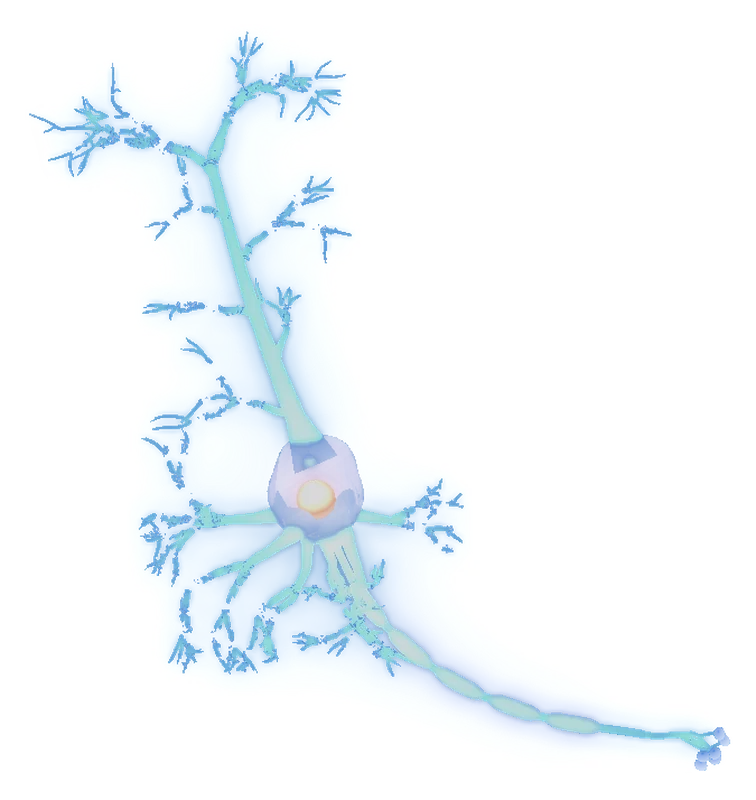
Pyramidal neuron
Cortex and hippocampusThe main excitatory neuron of the cortex, with a triangular cell body and one long dendrite reaching toward the surface.
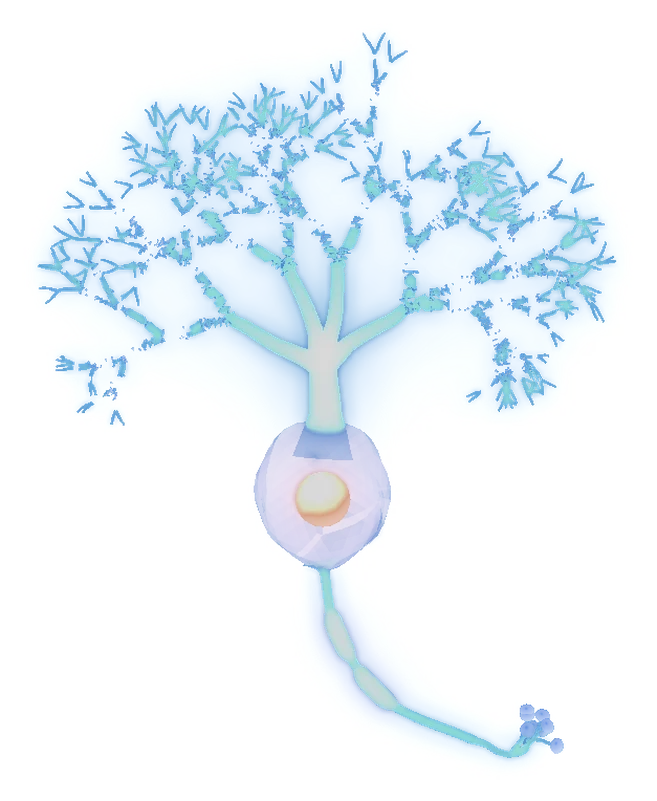
Purkinje cell
CerebellumHas a huge, flat, fan-shaped tree of dendrites. It is the only way signals leave the cerebellar cortex.
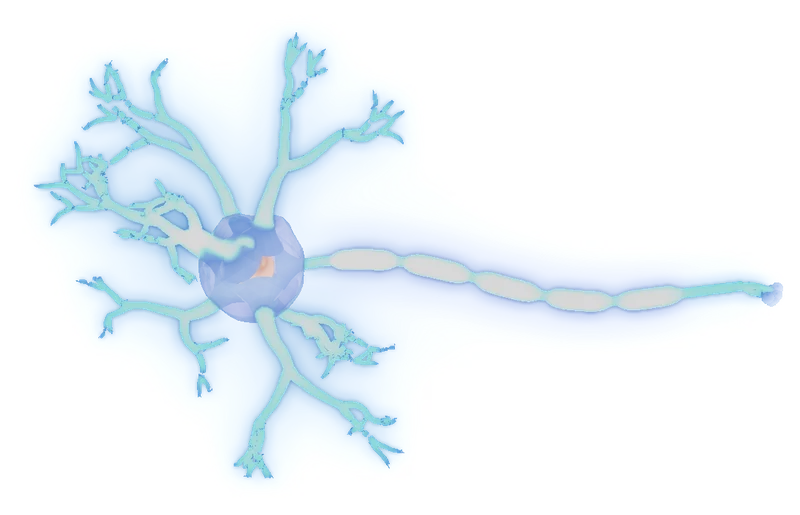
Motor neuron
Brainstem and spinal cordSends commands to muscles. Its axon can be about a metre long.
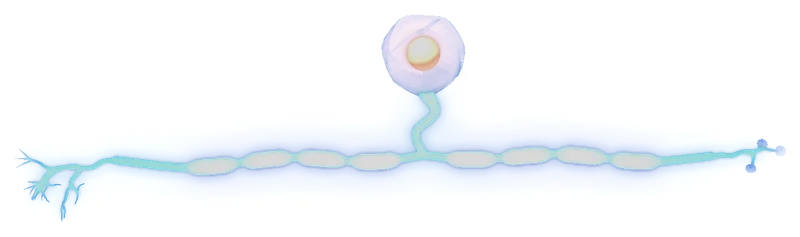
Sensory neuron
Skin, muscles and organsCarries touch, pain, temperature and body position toward the spinal cord and brain.
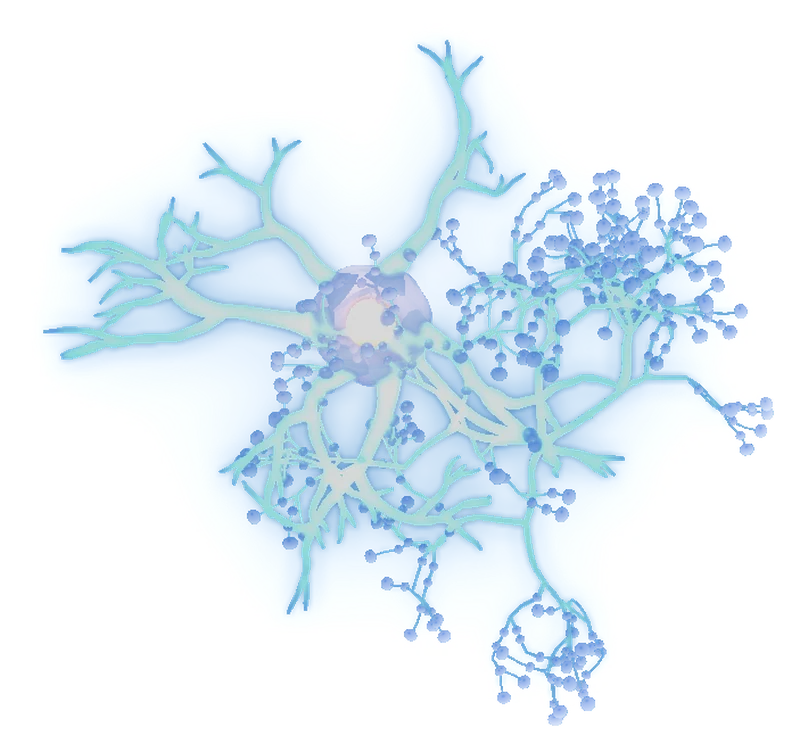
Interneuron
Throughout the brainConnects nearby neurons. Many are inhibitory and control the timing of whole circuits.
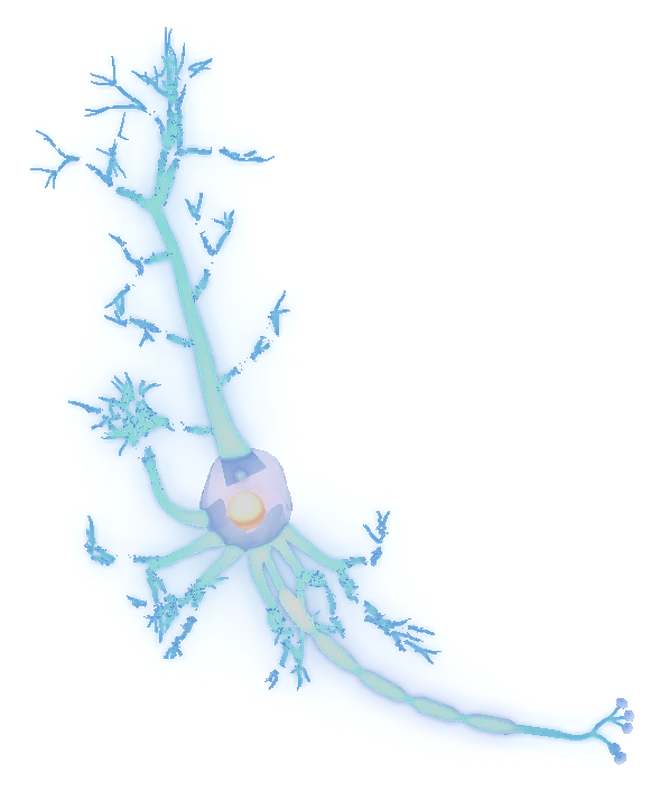
Place cell
HippocampusFires when you are in one particular place, building a map of your surroundings.
The messengers
When a signal reaches the end of an axon, it is passed on by chemicals called neurotransmitters. These six do most of the work.
Glutamate
The main "go" signal. Most fast excitatory messages in the brain use it.
GABA
The main "stop" signal. It calms neurons down and keeps activity in balance.
Dopamine
Involved in reward, motivation and starting movement. Its loss causes Parkinson's disease.
Serotonin
Helps regulate mood, sleep and appetite. Many antidepressants act on it.
Acetylcholine
Makes muscles contract and supports attention and memory.
Noradrenaline
Raises alertness and readies the body for action. Also called norepinephrine.
Articles about neurons
Watch neurons at work
Videos play here from YouTube. They are picked from educational channels and checked against this page's sources.
Research behind this page
Azevedo, F. A. C. et al. · 2009 · Journal of Comparative Neurology
Kandel, E. R., Koester, J. D., Mack, S. H. & Siegelbaum, S. A. · 2021 · McGraw Hill
Hodgkin, A. L. & Huxley, A. F. · 1952 · Journal of Physiology
Tell us and we will check it against the sources.