Cells that fire together
In 1949 psychologist Donald Hebb proposed that when one neuron repeatedly helps another to fire, the connection between them grows stronger.1TextbookThe Organization of Behavior: A Neuropsychological TheoryHebb, D. O. · 1949 In 1973 researchers found exactly this in the hippocampus: bursts of activity made connections stronger for hours or longer, an effect called long-term potentiation.2Peer-reviewed studyLong-lasting potentiation of synaptic transmission in the dentate area of the anaesthetized rabbit following stimulation of the perforant pathBliss, T. V. P. & Lømo, T. · 1973
Brains that change shape
London taxi drivers must memorise thousands of streets. Brain scans found that the back part of their hippocampus was larger than in other people, and larger still the longer they had been driving.3Peer-reviewed studyNavigation-related structural change in the hippocampi of taxi driversMaguire, E. A. et al. · 2000
Skills and facts are stored differently
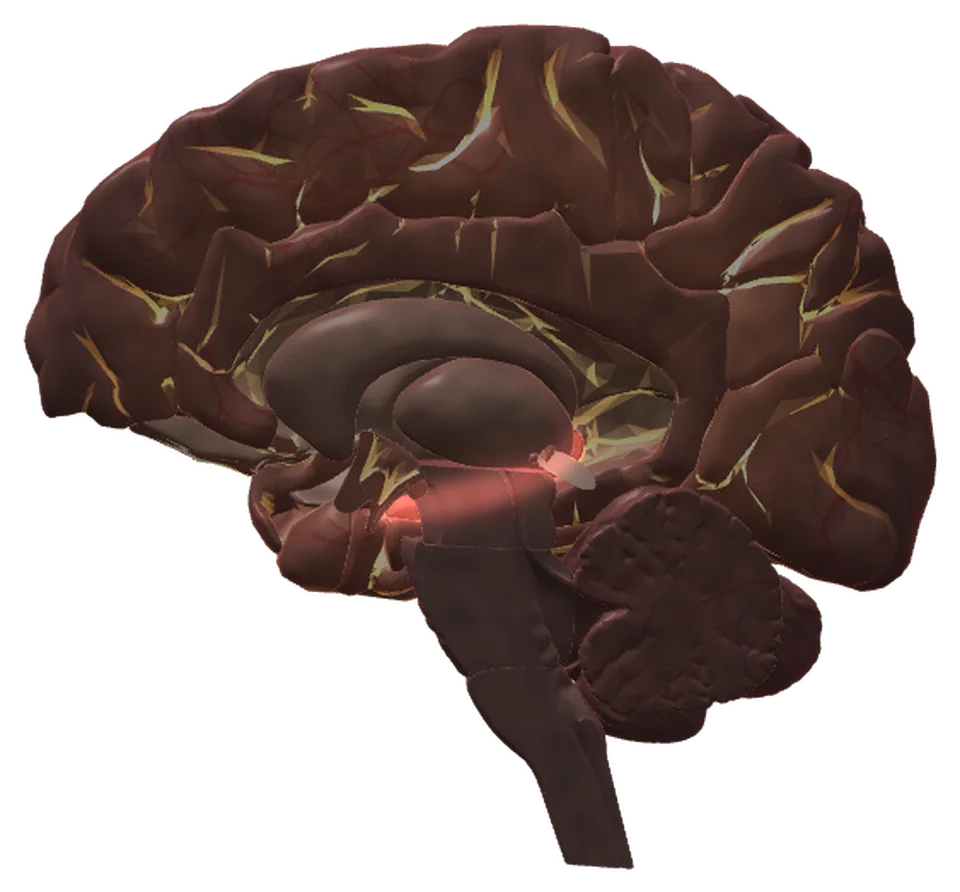
Patient H.M., who could no longer form new memories of events, still got better at a drawing task with practice, even though he did not remember having done it before.4TextbookPrinciples of Neural Science, 6th editionKandel, E. R., Koester, J. D., Mack, S. H. & Siegelbaum, S. A. · 2021 Skills rely heavily on the cerebellum and deep movement circuits rather than the hippocampus.4TextbookPrinciples of Neural Science, 6th editionKandel, E. R., Koester, J. D., Mack, S. H. & Siegelbaum, S. A. · 2021
Making learning stick
A review of hundreds of experiments found that spreading study sessions out over time leads to better long-term memory than cramming the same amount into one session.5ReviewDistributed practice in verbal recall tasks: a review and quantitative synthesisCepeda, N. J., Pashler, H., Vul, E., Wixted, J. T. & Rohrer, D. · 2006