Brain › Temporal lobe › Wernicke's area Temporal lobe

Wernicke's area

Back of the left temporal lobe in most people
● Reviewed Nov 20263 sources1 peer-reviewed3 videos

Helps you understand the meaning of words you hear and read.

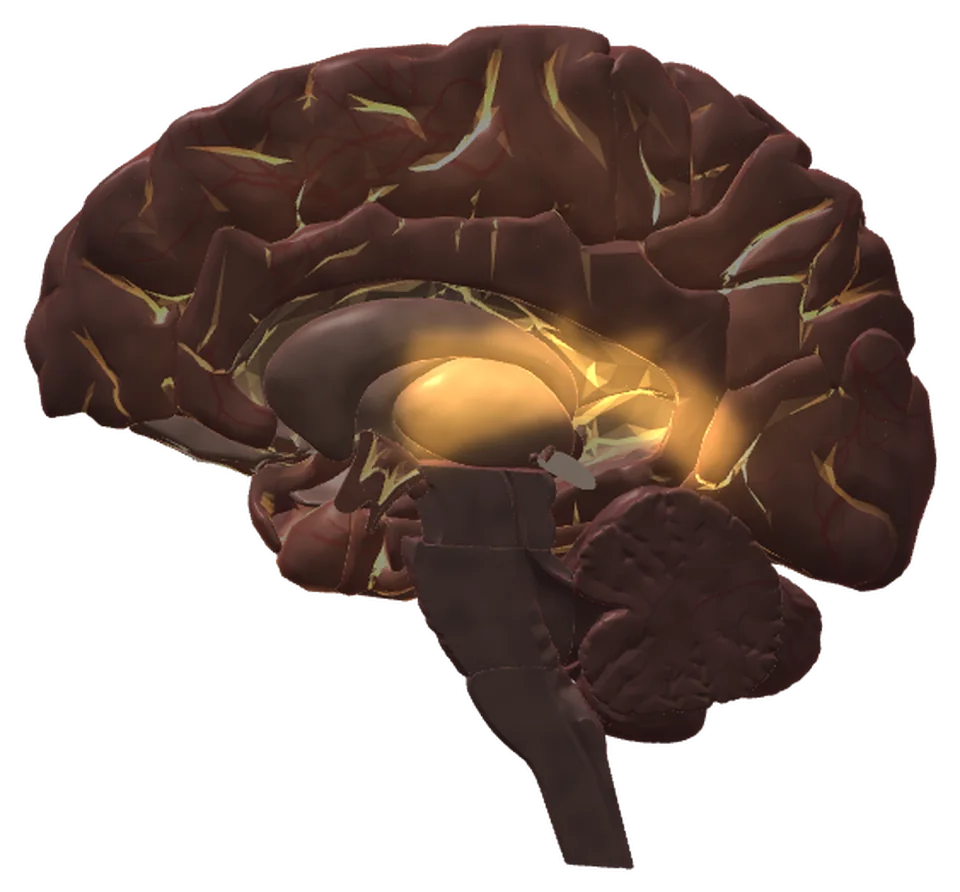
The brain with the Wernicke's area lit up
1874described by Carl Wernicke
Left sidein most people
Meaningunderstanding language
Fluentspeech stays fluent when damaged

What it does

In 1874 Carl Wernicke described patients who spoke fluently but made little sense and could not understand others. Their damage was at the back of the left temporal lobe.1Historic paperDer aphasische SymptomencomplexWernicke, C. · 1874 He proposed that this area connects to Broca's area, and a fibre bundle called the arcuate fasciculus does link the two.2TextbookPrinciples of Neural Science, 6th editionKandel, E. R., Koester, J. D., Mack, S. H. & Siegelbaum, S. A. · 2021

Key ideaLanguage areas care about meaning, not sound: sign language uses the same left-side network.

When it is damaged

Wernicke's aphasia causes fluent speech full of wrong or invented words, and great difficulty understanding others. Unlike in Broca's aphasia, people are often unaware that their speech is hard to follow.2TextbookPrinciples of Neural Science, 6th editionKandel, E. R., Koester, J. D., Mack, S. H. & Siegelbaum, S. A. · 2021

Not only for sound

Deaf people who use sign language and have damage to the same left-side areas develop similar problems in signing, which shows these areas handle language itself, not just hearing.3Peer-reviewed studyThe neurobiology of sign language and its implications for the neural basis of languageHickok, G., Bellugi, U. & Klima, E. S. · 1996

Videos

Watch and learn

Wernicke's Area in 2 minutes
IntroNeuroscientifically Challenged
What is Wernicke's aphasia?
IntroNational Aphasia Association
Wernicke's aphasia: what it sounds like
Real storyTactus Therapy

Videos play here from YouTube. They are picked from educational channels and checked against this page's sources.

Sources

Research behind this page

How we choose sources →
1
Der aphasische Symptomencomplex

Wernicke, C. · 1874 · Cohn & Weigert, Breslau

Historic paperFind it →
2
Principles of Neural Science, 6th edition

Kandel, E. R., Koester, J. D., Mack, S. H. & Siegelbaum, S. A. · 2021 · McGraw Hill

Textbook
3
The neurobiology of sign language and its implications for the neural basis of language

Hickok, G., Bellugi, U. & Klima, E. S. · 1996 · Nature

Peer-reviewed studyFind it →
Spotted a mistake?

Tell us and we will check it against the sources.

Report a mistake

Page: /brain/wernickes-area