Brain › Temporal lobe Temporal lobe

Temporal lobe

Sides of the brain · behind the temples
● Reviewed Nov 20263 sources1 peer-reviewed3 videos

Handles hearing, understanding language, recognising faces and objects, and forming new memories.

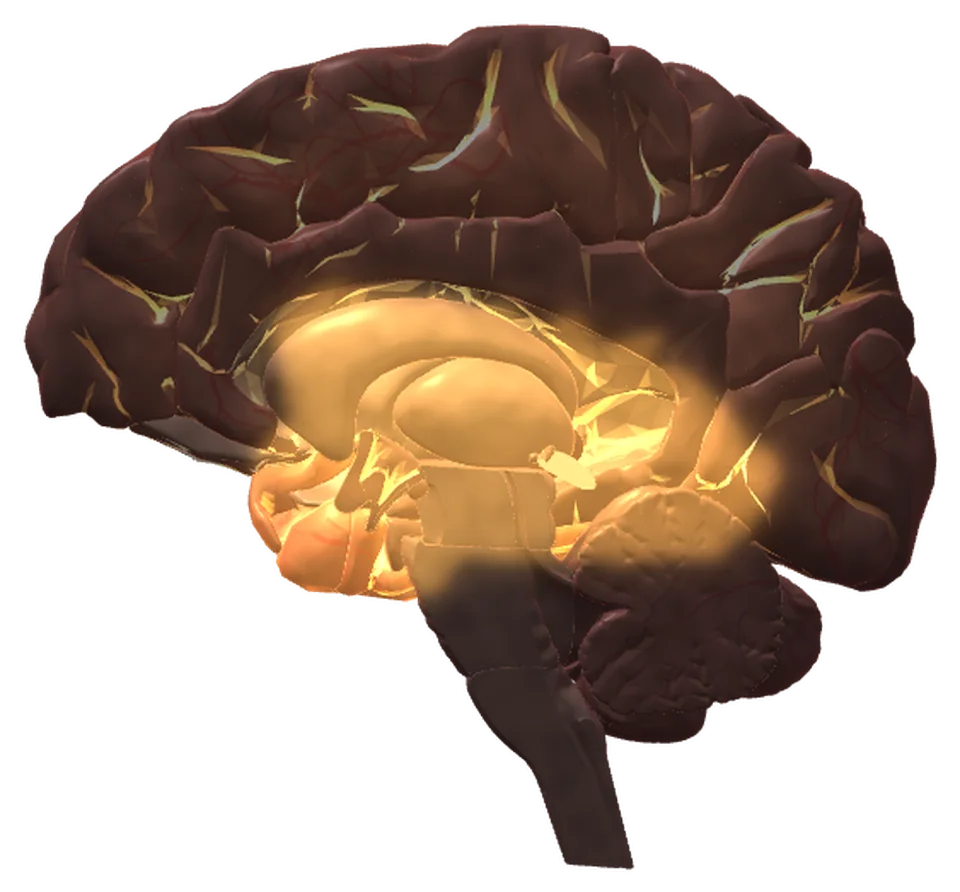
The brain with the Temporal lobe lit up
Hearingprimary auditory cortex
Wernicke's areaunderstanding language
Facesfusiform gyrus
Memoryhippocampus on its inner side

What it does

The upper part of the temporal lobe holds the primary auditory cortex, the first stop in the cortex for sound. On the left in most people, Wernicke's area helps you understand language.1Historic paperDer aphasische SymptomencomplexWernicke, C. · 1874

The lower surface recognises objects and faces. Its inner side contains the hippocampus and amygdala, which are key for memory and emotion.2TextbookPrinciples of Neural Science, 6th editionKandel, E. R., Koester, J. D., Mack, S. H. & Siegelbaum, S. A. · 2021

Key ideaHearing a word, knowing what it means and remembering where you heard it all happen in the temporal lobe.

When it is damaged

Damage to Wernicke's area causes Wernicke's aphasia: speech stays fluent but loses meaning, and understanding others becomes hard.1Historic paperDer aphasische SymptomencomplexWernicke, C. · 1874 Damage to the inner temporal lobe can stop new long-term memories from forming, as in patient H.M.3Peer-reviewed studyLoss of recent memory after bilateral hippocampal lesionsScoville, W. B. & Milner, B. · 1957

Parts of the temporal lobe

Primary auditory cortex

First stop in the cortex for sound.

Wernicke's area

Understanding spoken and written language.

Fusiform gyrus

Recognising faces and objects.

Entorhinal cortex

The main gateway into the hippocampus.

Videos

Watch and learn

Lobes and landmarks of the brain surface in 2 minutes
IntroNeuroscientifically Challenged
What Is Wernicke's Aphasia
IntroNational Aphasia Association
Face blindness: facial recognition in the brain
Real storyNational Science Foundation

Videos play here from YouTube. They are picked from educational channels and checked against this page's sources.

Sources

Research behind this page

How we choose sources →
1
Der aphasische Symptomencomplex

Wernicke, C. · 1874 · Cohn & Weigert, Breslau

Historic paperFind it →
2
Principles of Neural Science, 6th edition

Kandel, E. R., Koester, J. D., Mack, S. H. & Siegelbaum, S. A. · 2021 · McGraw Hill

Textbook
3
Loss of recent memory after bilateral hippocampal lesions

Scoville, W. B. & Milner, B. · 1957 · Journal of Neurology, Neurosurgery & Psychiatry

Peer-reviewed studyFind it →
Spotted a mistake?

Tell us and we will check it against the sources.

Report a mistake

Page: /brain/temporal-lobe