Brain › Brainstem Brainstem

Brainstem

Base of the brain · joins the spinal cord
● Reviewed Nov 20262 sources3 videos

Keeps you alive. It runs breathing, heart rate, sleep and wakefulness, and carries every signal between the brain and body.

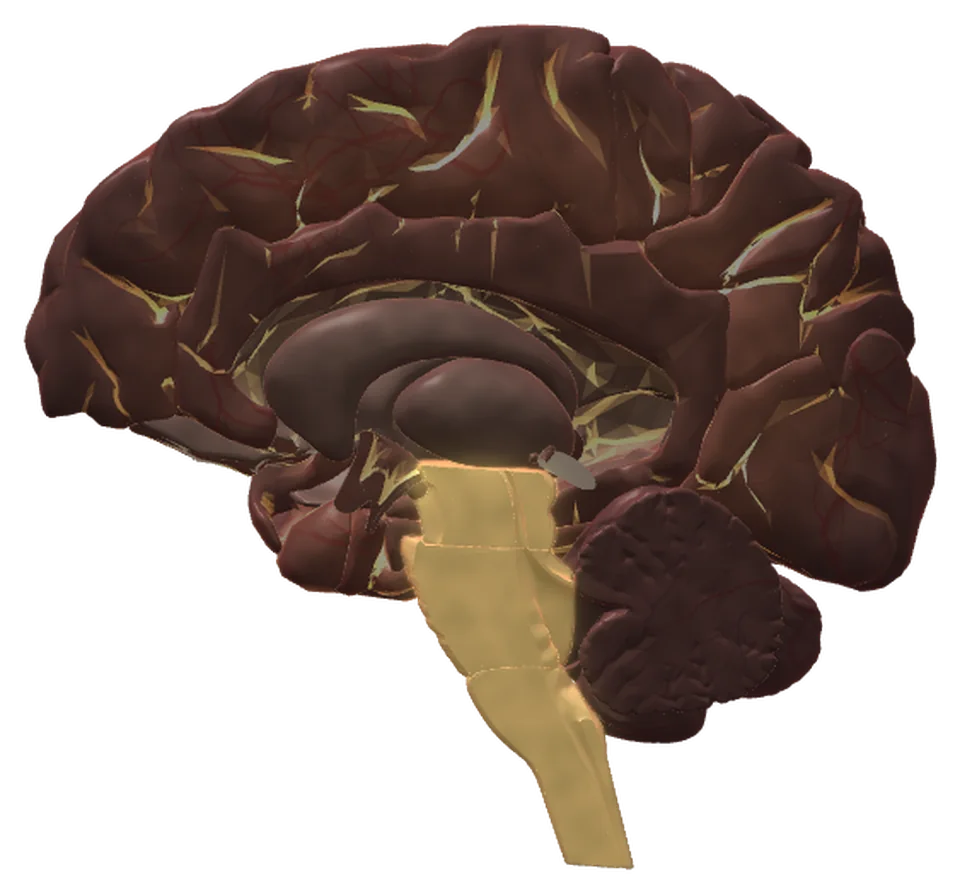
The brain with the Brainstem lit up
3 partsmidbrain, pons, medulla
10 of 12cranial nerves start here
Wakefulnessreticular formation
Dopaminesubstantia nigra

What it does

The brainstem has three parts: the midbrain, pons and medulla. The medulla controls heartbeat and breathing. A network running through all three, the reticular formation, keeps the rest of the brain awake: stimulating it wakes a sleeping animal.1Historic paperBrain stem reticular formation and activation of the EEGMoruzzi, G. & Magoun, H. W. · 1949

Most of the nerves for the face, eyes, mouth and throat leave from the brainstem.2TextbookPrinciples of Neural Science, 6th editionKandel, E. R., Koester, J. D., Mack, S. H. & Siegelbaum, S. A. · 2021

Key ideaYou can lose large parts of the cortex and survive; the brainstem is the part you cannot live without.

When it is damaged

Because so much passes through a small space, even small injuries can be serious, causing loss of consciousness or trouble breathing. Damage to the front of the pons can cause locked-in syndrome: a person is awake and aware but can move only their eyes.2TextbookPrinciples of Neural Science, 6th editionKandel, E. R., Koester, J. D., Mack, S. H. & Siegelbaum, S. A. · 2021

Parts of the brainstem

Midbrain

Eye movements and reflexes to sight and sound.

Substantia nigra

Makes dopamine that helps start movement.

Pons

Relays signals, helps set breathing and sleep.

Medulla oblongata

Heartbeat, breathing, swallowing and reflexes.

Reticular formation

Keeps you awake and alert.

Videos

Watch and learn

The Brainstem in 2 minutes
IntroNeuroscientifically Challenged
Medulla Oblongata in 2 minutes
IntroNeuroscientifically Challenged
Surviving locked-in syndrome
Real storyCBS Sunday Morning

Videos play here from YouTube. They are picked from educational channels and checked against this page's sources.

Sources

Research behind this page

How we choose sources →
1
Brain stem reticular formation and activation of the EEG

Moruzzi, G. & Magoun, H. W. · 1949 · Electroencephalography and Clinical Neurophysiology

Historic paperFind it →
2
Principles of Neural Science, 6th edition

Kandel, E. R., Koester, J. D., Mack, S. H. & Siegelbaum, S. A. · 2021 · McGraw Hill

Textbook
Spotted a mistake?

Tell us and we will check it against the sources.

Report a mistake

Page: /brain/brainstem