What it does
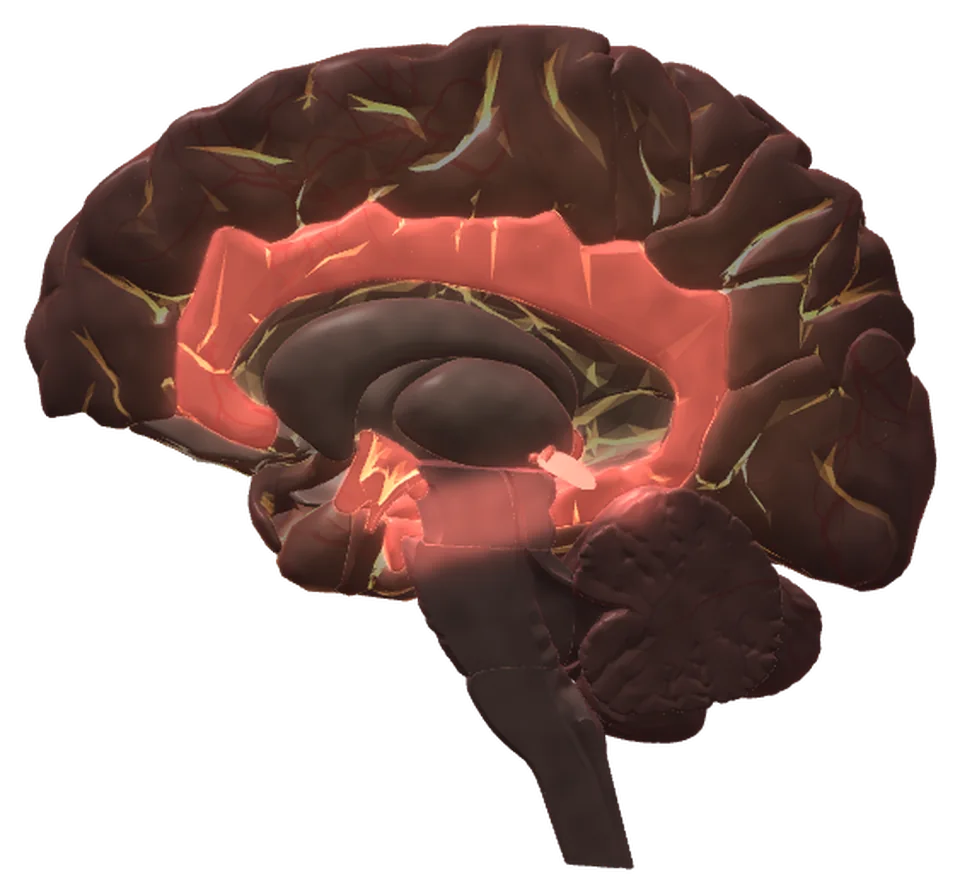
The limbic system is a set of structures on the inner edge of each hemisphere. In 1937 James Papez proposed that a loop running through the hippocampus, hypothalamus, thalamus and cingulate gyrus produces emotion.1Historic paperA proposed mechanism of emotionPapez, J. W. · 1937 Today we know the parts do different jobs: the hippocampus forms memories, the amygdala detects threat and the hypothalamus controls hunger, thirst and hormones.2ReviewEmotion circuits in the brainLeDoux, J. E. · 20003TextbookPrinciples of Neural Science, 6th editionKandel, E. R., Koester, J. D., Mack, S. H. & Siegelbaum, S. A. · 2021
When it is damaged
Damage to the hippocampus on both sides stops new long-term memories from forming.4Peer-reviewed studyLoss of recent memory after bilateral hippocampal lesionsScoville, W. B. & Milner, B. · 1957 Damage to the amygdala on both sides can leave a person without a normal sense of fear.5Peer-reviewed studyThe human amygdala and the induction and experience of fearFeinstein, J. S., Adolphs, R., Damasio, A. & Tranel, D. · 2011
Parts of the limbic system
Hippocampus
Forms new memories and maps where you are.
Amygdala
Detects threats and drives fear.
Hypothalamus
Hunger, thirst, body temperature and hormones.
Cingulate gyrus
Emotion, pain and noticing mistakes.
Fornix
A fibre bundle carrying signals out of the hippocampus.